Martyn's Law for shops and retail
Last reviewed:
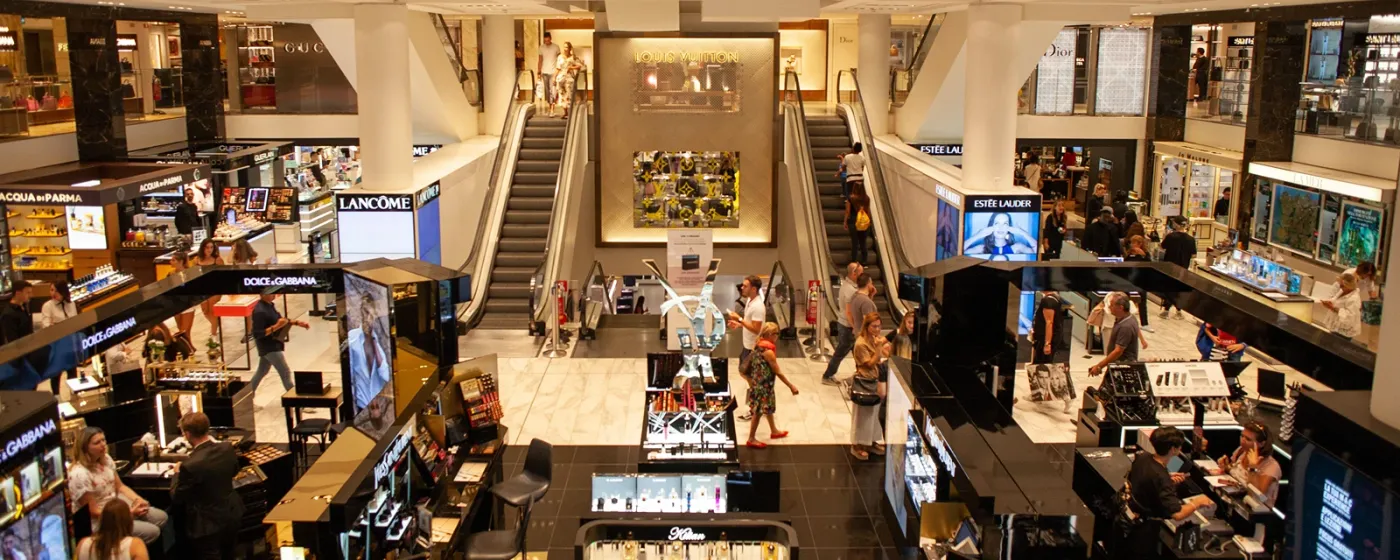
If you run a shop, Martyn's Law may apply to you, though most typical high-street stores are comfortably under the threshold on an ordinary day. This guide covers what the law expects of a shop like yours, who's responsible for meeting it, and what changes once Black Friday, the January sales, or a shopping-centre unit enters the picture.
The two tiers, and what they mean for a shop
Before working out where your shop fits, it helps to understand how the law categorises premises and what those categories demand. Martyn's Law places public premises into two main tiers based strictly on maximum expected headcount on the shop floor at once, customers and staff together.
Standard tier (200–799 people)
- What it means: focuses on simple, low-cost preparedness.
- Key requirement: you must notify the regulator and maintain basic procedures for four emergency responses (evacuation, invacuation, lockdown and communication).
- Implications: no mandatory paid training, expensive security upgrades, or heavy documentation are required.
Enhanced tier (800+ people)
- What it means: asks more of high-capacity premises, because of the larger potential impact of an incident.
- Key requirement: includes all standard tier duties, plus formal requirements like a documented vulnerability assessment, a designated senior responsible individual, and measures designed to reduce the premises' vulnerability.
A standalone shop rarely reaches this tier on its own footfall. Where it comes up is a large department store, or a shopping centre's summed total across every unit, covered in the examples below.
How to tell if your shop needs a plan for Martyn's Law
Retail premises fall under the Act's "shops etc" category.
Your tier depends on the headcount you can reasonably expect on the shop floor at once, including predictable spikes like Black Friday or the January sales, defined in the guidance as occurring "from time to time." Staff across different shifts don't stack; it's about who's simultaneously present, not your total headcount across the day.
Below are some examples to help illustrate this:
- Shop A (out of scope). A small independent boutique with 25 customers on the floor and 4 staff comes to 29, nowhere near 200.
- Shop B (standard tier, recurring sales peak). A clothing shop usually well under 200 predictably exceeds it every Black Friday and January sale. Because that recurring peak is reasonably expected, the shop is in scope on the "from time to time" test, even though most of the year looks nothing like it.
- Shop C (shopping-centre nesting). A unit inside a shopping centre with 150 customers and staff stays out of scope on its own numbers, even though the centre as a whole, summing every unit together, is well into the enhanced tier. The unit's total doesn't inherit the centre's, and vice versa.
To double check whether your shop comes under the scope of Martyn's Law, use our free checker.
Who is the "responsible person"?
Someone has to be legally on the hook for getting this done. The law calls that person the responsible person, and for an independent shop, that's the store operator running day-to-day trading. For a chain, it's the operator in control of each specific store, which is why the guidance's own supermarket-chain example assesses every store separately rather than nationally, some stores out of scope, some standard tier, some enhanced, based on each site's own numbers.
In a shopping centre, the picture nests: the centre operator is responsible for the centre as a whole, while each unit's occupier is separately responsible for their own unit, and the guidance notes centre and unit responsible persons should co-ordinate their procedures rather than plan in isolation.
See who the responsible person is and the principal-use and nesting rules for the full detail.
What you must do (standard tier)
If you're in the standard tier, compliance requires two primary actions:
- Register your shop with the Security Industry Authority
(SIA), the law's regulator.
- This is a simple registration, not an application process.
- There's no fee and no approval process to wait for. The SIA portal isn't open yet, so no action is required until it launches.
- Prepare four core emergency procedures. You must
establish basic, practical procedures for four scenarios:
- Evacuation. Getting people out of the building safely.
- Invacuation. Moving people to safe spaces inside the building.
- Lockdown. Securing doors to keep an external threat out.
- Communication. Quickly telling customers and staff what to do.
Retail challenge: tannoy or verbal communication needs to reach customers browsing at the back of the store, not just those near the till. A back-of-house area can often double as an invacuation space, worth deciding in advance rather than on the day. Clear roles for till-area staff during a lockdown, who locks the door, who talks to customers, are the kind of practical details worth working through rather than a generic procedure copied from another business.
What you do not have to do (standard tier)
A lot of the worry around Martyn's Law comes from assuming it means security staff, an expensive consultant, or mandatory training courses for your team. None of that is required at the standard tier.
- You do not need a written plan by law, though the guidance recommends one, since it's hard to demonstrate compliance without it (para 7.32). See what para 7.32 actually says.
- You do not need to hire security staff or install CCTV. See what Martyn's Law actually requires on security kit.
- You do not need paid or accredited training; using a third-party product or service is never mandatory (para 6.7).
- You do not need a fixed review schedule; periodic review is good practice, not a legal requirement.
- You do not need a risk assessment document or a designated senior individual at the standard tier. Those apply only at the enhanced tier.
How to get Martyn's Law ready in minutes
If you're in scope for the standard tier, every duty above can be worked out and written down by hand, for free. It's perfectly possible, and we'd rather tell you that straight than fear-monger you into hiring a consultant or buying a tool you don't need.
What's genuinely fiddly for retail is nested premises and high staff turnover, especially seasonal hires around the exact periods, like Black Friday, that push numbers up in the first place.
That's what Martyn's Law Plan was built to solve. It guides you through building a plan around your actual floor layout and back-of-house areas, with a briefing sheet quick enough for a seasonal starter to read on their first shift. Above all, it gives you peace of mind that you're prepared for when an inspection comes.
For now, start with the free tier checker, no email required, to confirm where you stand.
Similar venues: restaurants and cafés and hotels and B&Bs.
Common questions
Is my shop in scope?
For a typical high-street shop, almost certainly not; genuine simultaneous presence of 200 or more, customers and staff together at one moment, is a high bar for most independent retail. It becomes a live question once you factor in predictable busy periods, sales events or a larger footprint, which is why it's worth checking your own numbers rather than assuming either way.
Who complies in a shopping centre, me or the landlord?
Both, at their own level. The centre operator is the responsible person for the centre as a whole, and can be enhanced by summing all the units together. Each unit is separately assessed too, with its own occupier as the responsible person for that unit specifically. Your unit's total doesn't get inherited from the centre's, and vice versa, per the guidance's own shopping-centre example.
Do Black Friday crowds count toward our numbers?
Yes. The guidance's own example is a clothing shop that's usually well under 200 but predictably exceeds it every Black Friday and January sale, and that recurring peak brings it into the standard tier, even though a typical Tuesday looks nothing like it.
About this guide. Written by the Martyn's Law Plan team, based on the statutory guidance published under the Terrorism (Protection of Premises) Act 2025. Last reviewed: . Read the official guidance on GOV.UK.
Sources: Terrorism (Protection of Premises) Act 2025; Home Office statutory guidance (April 2026, updated May 2026) and supplementary documents. Paragraph references are to the statutory guidance. General information, not legal advice. Contains public sector information licensed under the Open Government Licence v3.0.