Martyn's Law for restaurants and cafés
Last reviewed:
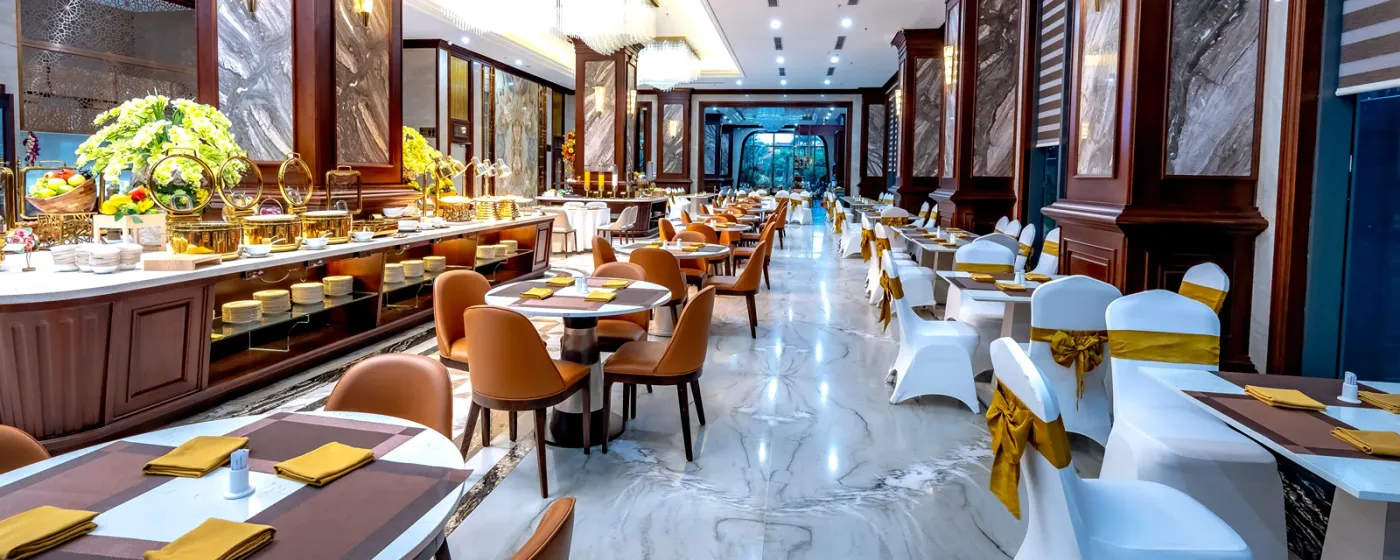
Restaurants and cafés sit in the Act's food and drink category, and most independent sites are comfortably under the 200-person threshold and out of scope entirely. The ones that do get caught tend to have one thing in common: outdoor seating or a queueing area that's part of the premises, added to indoor covers, is what tips a site that looks small on paper over the line.
Does Martyn's Law apply to restaurants and cafés?
Restaurants, cafés, bars and similar venues fall under the Act's food and drink category. A premises is in scope when it's a building, used for one of the Act's listed activities, open to the public, and can reasonably expect 200 or more people at once, from time to time, staff included. For the large majority of independent restaurants and cafés, genuine peak numbers, covers plus kitchen and front-of-house staff, sit well under that figure, and there's nothing further to do.
Working out your capacity: covers, outdoor seating and staff
Count everyone who could reasonably be on site at your busiest realistic moment: seated covers, anyone waiting inside or in a queueing area that's part of your premises, outdoor seating that's part of the building, and kitchen and front-of-house staff. The supplementary guidance's own worked examples show exactly how this adds up. A café whose fire-safety safe occupancy is 180 (staff included), plus an attached outdoor area seating 30, comes to 210, in scope, even though the indoor figure alone wouldn't be. A larger restaurant with 450 fixed seats and 30 staff comes to 480, standard tier. See how to count your capacity for the general method, including what counts as part of your premises versus the pavement outside your door.
If your numbers only get close to 200 on predictable busy periods, weekend evenings, a seasonal rush, that still counts. See the "from time to time" rule for how occasional peaks are treated.
Who is the responsible person at a restaurant or café?
For an independent restaurant or café, the duty sits with the owner-operator running the site. For a small chain, it's usually held centrally by head office as the party in control across sites, though day-to-day arrangements can vary, so it's worth confirming rather than assuming for your specific setup. See who the responsible person is for the full test, including how it works for leased or franchised units.
What the standard tier actually requires
Two duties: a one-time notification to the regulator, and public protection procedures covering evacuation, invacuation, lockdown and communication, in place so far as reasonably practicable. See the standard tier explained for the full detail.
A few things are worth thinking through specifically for a restaurant or café. A front-of-house script, a short, calm phrase staff actually use, matters more than a long written procedure nobody's rehearsed, especially in a small dining room where panic spreads fast. Whether the kitchen makes sense as an invacuation space, somewhere to bring people in from an outdoor terrace, or whether it's better evacuated like the rest of the building, is worth deciding in advance rather than in the moment. And communication in a noisy, full dining room needs to be loud and specific enough to cut through, not a subtle announcement that gets lost under conversation.
What you do not have to do
- You do not need a written plan by law, though the guidance recommends one, since it's hard to demonstrate compliance without it (para 7.32). See what para 7.32 actually says.
- You do not need to hire security staff or install CCTV.
- You do not need paid or accredited training; using a third-party product or service is never mandatory (para 6.7).
- You do not need a fixed review schedule; periodic review is good practice, not a legal requirement.
- You do not need a risk assessment document or a designated senior individual. Those apply only at the enhanced tier, for premises expecting 800 or more.
What it costs, and how the service helps
None of the above requires spending. What takes time in a small, busy kitchen and dining room is finding the time to think it through properly and keep front-of-house staff, who often turn over quickly in hospitality, briefed and current. Our service turns a short questionnaire into a plan written for your actual floor and kitchen layout, with a briefing sheet new starters can read in minutes.
Start with the free tier checker, no email required, to confirm where you stand.
Similar venues: pubs and bars and hotels and B&Bs.
Common questions
Does outdoor seating count?
Yes, if it's part of your premises, a terrace, pavement seating you control, or a garden attached to the building. Add it to your indoor covers the same way the guidance's own café example does. Seating on a public pavement you don't control, rather than land that's genuinely part of your premises, is a different question.
We're only busy on Friday and Saturday nights. Does that count?
Yes, if it happens with any regularity. The test is what you could reasonably expect "from time to time", not your average night, so a predictable weekend rush counts even if weekday lunchtimes are quiet. See our guide to the "from time to time" rule for the detail.
We're a unit in a food hall. Does the whole food hall's total apply to us?
Not automatically. Individually occupied units in a shared building are generally assessed separately, with each operator responsible for their own unit, while the site operator handles the shared parts. If your setup is more tightly nested or shared than that, it's worth checking carefully rather than assuming either way.
About this guide. Written by the Martyn's Law Plan team, based on the statutory guidance published under the Terrorism (Protection of Premises) Act 2025. Last reviewed: . Read the official guidance on GOV.UK.
Sources: Terrorism (Protection of Premises) Act 2025; Home Office statutory guidance (April 2026, updated May 2026) and supplementary documents. Paragraph references are to the statutory guidance. General information, not legal advice. Contains public sector information licensed under the Open Government Licence v3.0.