Martyn's Law for village halls
Last reviewed:
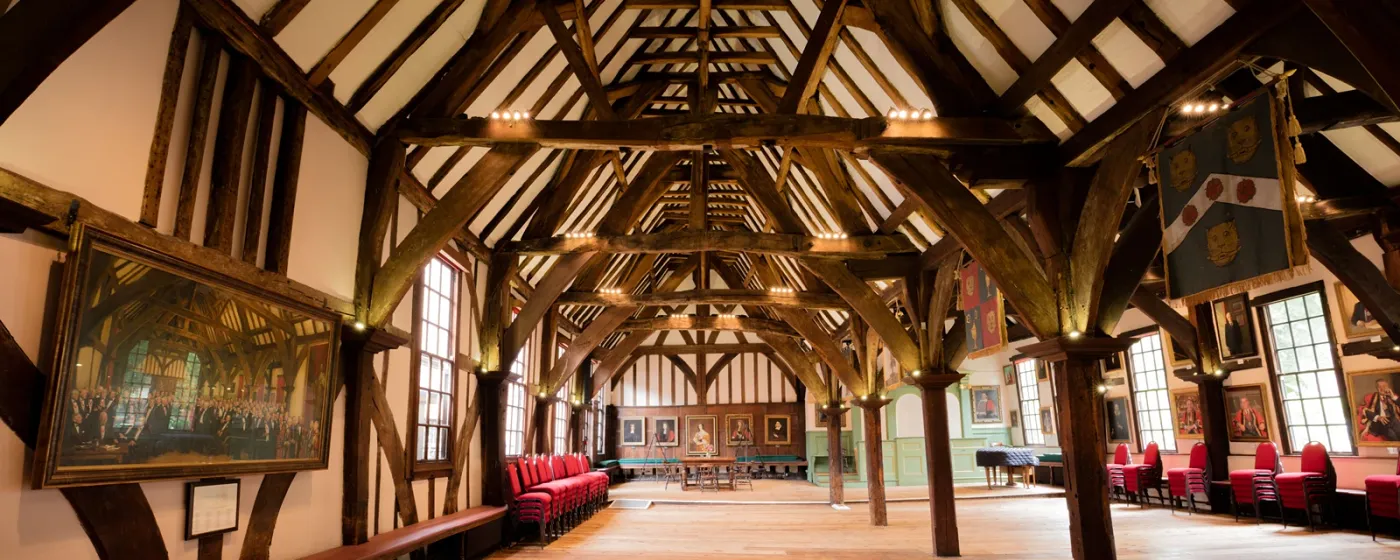
If you sit on a village hall committee, Martyn's Law may well apply to your hall, at least on your busiest bookings. Here's what the law actually asks of a hall like yours, who on the committee carries that responsibility, and what meeting it looks like in practice.
The two tiers, and what they demand
Before working out where your hall fits, it helps to understand how the law categorises premises and what those categories demand. Martyn's Law places public premises into two main tiers based strictly on maximum expected headcount, including everyone in the building: hirers, attendees, staff and volunteers.
Standard tier (200–799 people)
- What it means: focuses on simple, low-cost preparedness.
- Key requirement: you must notify the regulator and maintain basic procedures for four emergency responses (evacuation, invacuation, lockdown and communication).
- Implications: no mandatory paid training, expensive security upgrades, or heavy documentation are required.
Enhanced tier (800+ people)
- What it means: asks more of high-capacity premises, because of the larger potential impact of an incident.
- Key requirement: includes all standard tier duties, plus formal requirements like a documented vulnerability assessment, a designated senior responsible individual, and measures designed to reduce the premises' vulnerability.
Very few halls reach this tier on their own numbers. Where it comes up is a large one-off hire, covered in the examples below.
How to tell if your village hall needs a plan for Martyn's Law
Halls sit in the Act's "halls etc" category, alongside community centres and venues for hire.
Your tier depends on the headcount you can reasonably expect on your busiest bookings, including predictable spikes like an annual panto or a big wedding reception, defined in the guidance as occurring "from time to time." That number must include your volunteers and anyone working, not just attendees.
Below are some examples to help illustrate this:
- Hall A (out of scope). Your safe occupancy certificate says 250, but five years of booking records show you've never actually had more than 150 people on site at once. Because 150 is the real, evidenced maximum, the hall stays out of scope, whatever the certificate says.
- Hall B (standard tier, recurring peak). Most bookings, a seated hall plus kitchen volunteers and performers, come to around 195, comfortably under 200. But the annual village panto packs the hall to 220, every year. Because that happens reliably, not as a one-off, the hall is in scope on the "from time to time" test.
- Hall C (one-off versus recurring). A hall normally well under 200 gets a one-off booking from a touring band expecting 250. Because that's unforeseen and isn't expected to happen again, the hall stays out of scope for that booking. But if the band's success continues and they book further concerts there, and 200+ becomes something the hall can reasonably expect again, the hall is drawn into scope from that point.
To double check whether your hall comes under the scope of Martyn's Law, use our free checker.
Who is the "responsible person"?
Someone has to be legally on the hook for getting this done. The law calls that person the responsible person, and for a village hall, it's ordinarily the management committee or trustee body as a whole, not one unlucky volunteer. Tasks can be delegated, a bookings secretary, a warden, but legal responsibility can't.
The one genuine exception is a qualifying event. If a private hirer takes control of your hall for an 800-plus ticketed event with entry checks, the guidance's own example makes that hirer the responsible person for the event, with the enhanced duties, including notifying the regulator, landing on them, not your committee. Your committee remains responsible for the hall the rest of the time.
See who the responsible person is for the full control test.
What you must do (standard tier)
If you're in the standard tier, compliance requires two primary actions:
- Register your hall with the Security Industry Authority
(SIA), the law's regulator.
- This is a simple registration, not an application process.
- There's no fee and no approval process to wait for. The SIA portal isn't open yet, so no action is required until it launches.
- Prepare four core emergency procedures. You must
establish basic, practical procedures for four scenarios:
- Evacuation. Getting people out of the building safely.
- Invacuation. Moving people to safe spaces inside the building.
- Lockdown. Securing doors to keep an external threat out.
- Communication. Quickly informing whoever's on site what to do.
Village hall challenge: unlike most venues, a hall is often unstaffed between bookings, a yoga teacher with a key at 7am, a children's party on Saturday, so procedures written for permanent staff don't fit. The guidance addresses this directly: for premises that are sometimes unstaffed, consider how procedures could be followed by whoever is there, for example via posters and induction information (para 7.7). A one-page hirer briefing sheet issued with every booking, plus a poster by the main door, does most of the work here.
What you do not have to do (standard tier)
A lot of the worry around Martyn's Law comes from assuming it means CCTV upgrades, an expensive consultant, or mandatory training courses for your volunteers. None of that is required at the standard tier.
- You do not need a written plan by law, though the guidance recommends one, since it's hard to demonstrate compliance without it (para 7.32).
- You do not need CCTV, security staff, or any physical security measures beyond what you already run.
- You do not need paid or accredited training. Using a third-party product or service is never mandatory to comply (para 6.7).
- You do not need to review your procedures on a set schedule. Reviewing periodically is good practice, not a legal requirement (para 7.29).
- You do not need a risk assessment document or a designated senior individual at the standard tier. Those apply only at the enhanced tier.
How to get Martyn's Law ready in minutes
If you're in scope for the standard tier, every duty above can be worked out and written down by hand, for free. It's perfectly possible, and we'd rather tell you that straight than fear-monger you into hiring a consultant or buying a tool you don't need.
The part that takes time, especially for a committee that meets once a month, is reading the official guidance, applying it to your actual building, and getting it written down clearly enough that a volunteer who's never seen it before could follow it. It's a genuinely time-consuming job, and it's easy to be left second-guessing whether what you've written would actually hold up at inspection.
That's what Martyn's Law Plan was built to solve. It's a short online questionnaire any committee member can complete, about your hall, its layout and how it's normally hired out, that turns your answers into your four procedures, a written plan, a hirer briefing sheet, and a volunteer record built in, rather than a generic template. Above all, it gives you peace of mind that you're prepared for when an inspection comes.
For now, start with the free tier checker, no email required, to confirm where your hall stands.
Similar venues: churches and places of worship and gyms and leisure centres.
Common questions
Are village halls exempt from Martyn's Law?
No. Halls, whether a village hall, community centre or venue for hire, are their own named category under the Act ("halls etc"). Plenty of small halls stay out of scope simply because their genuine peak never reaches 200 including everyone working there, but there's no blanket exemption for halls as a type.
Does the committee comply, or whoever hires the hall on the night?
Ordinarily the committee. The management committee or trustee body carries the legal duty as the responsible person for the premises, not each individual hirer. The exception is a genuine qualifying event, 800 or more people with entry controls, where a hirer taking control of the hall for that event becomes the responsible person for the event itself, while the committee stays responsible for the hall the rest of the time.
Do we need to spend money to comply?
No. The standard tier doesn't require CCTV, security staff, paid training or any product or service (para 6.7). What it asks for is thinking time: working out your numbers, deciding your procedures, and briefing the volunteers and regular hirers who'll actually be there.
About this guide. Written by the Martyn's Law Plan team, based on the statutory guidance published under the Terrorism (Protection of Premises) Act 2025. Last reviewed: . Read the official guidance on GOV.UK.
Sources: Terrorism (Protection of Premises) Act 2025; Home Office statutory guidance (April 2026, updated May 2026) and supplementary documents. Paragraph references are to the statutory guidance. General information, not legal advice. Contains public sector information licensed under the Open Government Licence v3.0.